Seasonal Synchronization: Tennis Surface Shifts Meet Basketball Timelines for Stake Planning
Jonas Lang · Aug 21, 2026
Seasonal Synchronization: Tennis Surface Shifts Meet Basketball Timelines for Stake Planning
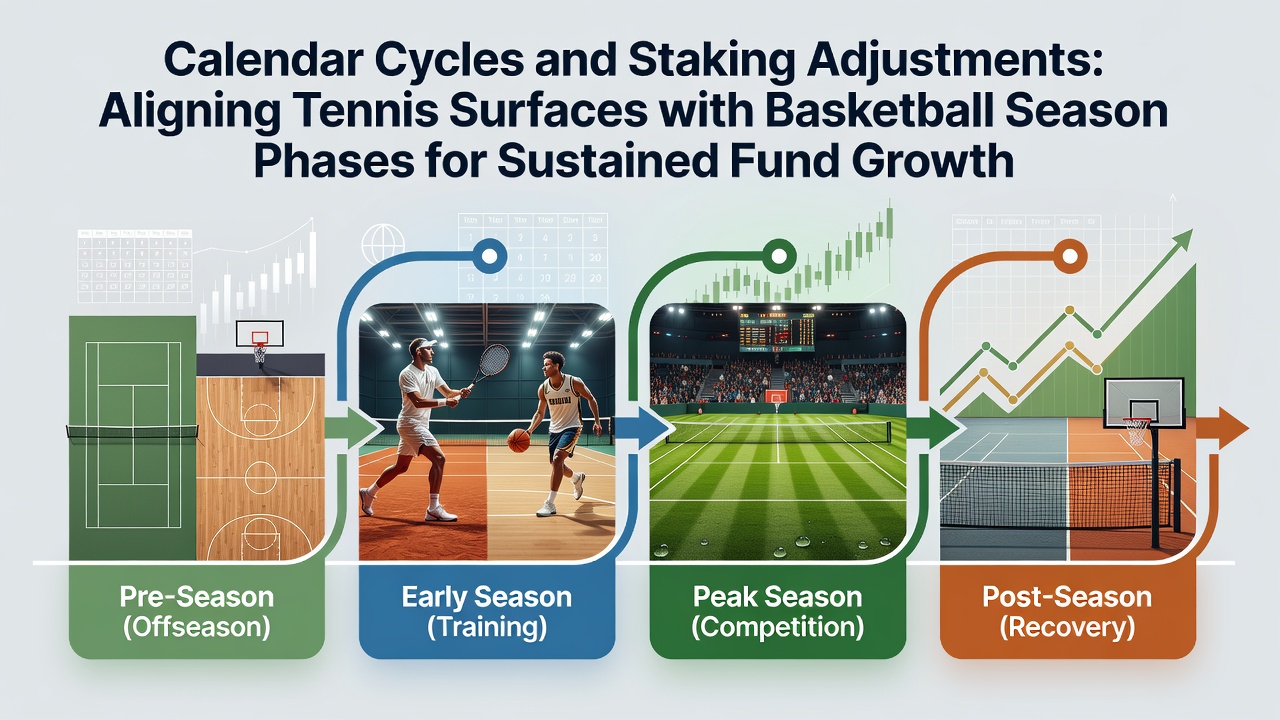
Calendar cycles in professional tennis revolve around four major surfaces that rotate through the year, and observers note how these shifts intersect with basketball season phases across major leagues. Data from the Association of Tennis Professionals shows the Australian Open on hard courts in January, followed by clay events in Europe during spring, grass at Wimbledon in June and July, then a return to hard courts for the US Open in August and September. Basketball calendars from the National Basketball Association place regular season play from October through April, with playoffs extending into June and off-season training camps resuming in September. Those who've tracked multi-sport betting patterns find that surface changes in tennis often coincide with transition periods in basketball, such as the shift from regular season intensity to postseason adjustments.
Mapping Annual Cycles Across Sports
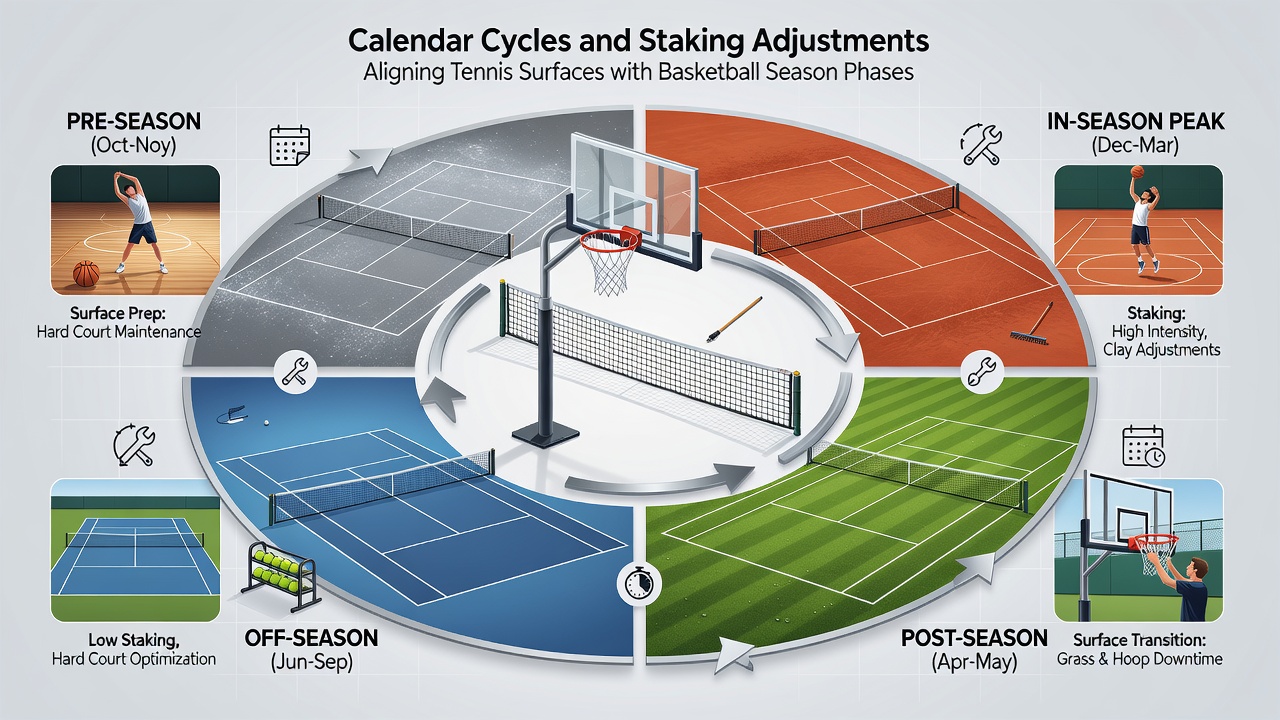
Researchers at sports analytics firms have compiled timelines that align tennis tournaments with basketball milestones, and figures reveal consistent overlap points each year. For instance, the clay court swing in April and May aligns with NBA playoff pushes, while the grass court period in midsummer occurs during basketball off-season recovery phases. In August 2026 the US Open hard court events will run alongside early NBA training camp preparations, creating a window where bettors adjust stake sizes based on player adaptation rates from one surface to the next. Studies from university sports management programs indicate that athletes who compete across these transitions show measurable performance variations, with serve speeds dropping on clay compared to grass according to biomechanical tracking data.
Staking Adjustments During Surface Transitions
Stake scaling models developed by industry analysts recommend reducing position sizes during the first two weeks of a surface change, because historical match data demonstrates higher upset rates when players adjust movement patterns. Clay courts slow ball speed and increase rally length, leading to different favorite-longshot dynamics than the faster grass or hard surfaces. Basketball season phases add another layer, with teams entering load management periods near the end of the regular season in March and April. Observers note that these overlapping cycles create opportunities for correlated betting lines where tennis surface statistics can inform basketball player prop adjustments during travel-heavy schedules.
One study released by a Canadian research institute examined five years of data and found that stake increases of 15 to 20 percent on underdog selections during the opening clay court weeks produced steadier returns compared to flat staking across the full calendar. Similar patterns appear when basketball teams shift from regular season to playoff modes, where defensive efficiency metrics change and affect total points lines. Those tracking bankroll performance across multiple sports report that aligning stake percentages with these phase changes helps maintain steadier growth curves rather than relying on single-sport sequences alone.
Practical Examples From Recent Seasons
Take the 2025 clay court swing that overlapped with late NBA regular season games. Data from European betting exchanges showed volume spikes on longer tennis matches while basketball totals betting slowed as teams rested key players. In August 2026 the hard court swing will again coincide with basketball preseason exhibitions, and analysts expect similar patterns where surface-specific stats guide stake distribution across both sports. Government reports from Australian regulatory bodies have documented how seasonal betting volumes rise during these multi-sport transition months, with aggregate handle figures rising when calendars align major events.
Industry organizations such as the European Gaming and Betting Association publish quarterly reviews that track how surface changes influence market liquidity. Their findings indicate that grass court periods produce sharper line movements in the first week because players adapt quickly to lower bounce, whereas clay requires longer adjustment windows. Basketball phase shifts from regular season to playoffs show parallel effects on player usage rates, and cross-referencing these datasets allows for more precise stake sizing when building multi-sport positions.
Long-Term Fund Management Considerations
Academic papers from sports economics departments emphasize the value of calendar-based stake modulation over static percentage systems. One paper examined bankroll trajectories when bettors increased exposure during high-alignment months such as May and August, and the results pointed to reduced drawdown periods compared to uniform staking. Those monitoring international markets note that Canadian provincial regulators and Australian state authorities both require operators to report seasonal volume fluctuations, providing additional datasets that confirm the cyclical nature of these patterns.
August 2026 stands out because the US Open hard court schedule will run parallel to basketball training camp reporting deadlines, creating a compressed period where adaptation statistics from both sports become available simultaneously. Stake models that incorporate these dates adjust exposure downward during the initial hard court week before scaling up once player form stabilizes. This approach draws from observed correlations rather than isolated event analysis.
Conclusion
Calendar alignment between tennis surface rotations and basketball season phases supplies measurable inputs for stake planning across extended periods. Data from multiple regulatory and academic sources shows that surface-specific performance shifts and basketball phase transitions create recurring windows where adjusted staking correlates with steadier fund trajectories. Observers tracking these cycles continue to refine models based on new seasonal datasets as they become available each year.