How Surface Variations Shape Layered Payout Structures in Tennis and Basketball Betting Hybrids
Jonas Lang · Jun 28, 2026

How Surface Variations Shape Layered Payout Structures in Tennis and Basketball Betting Hybrids
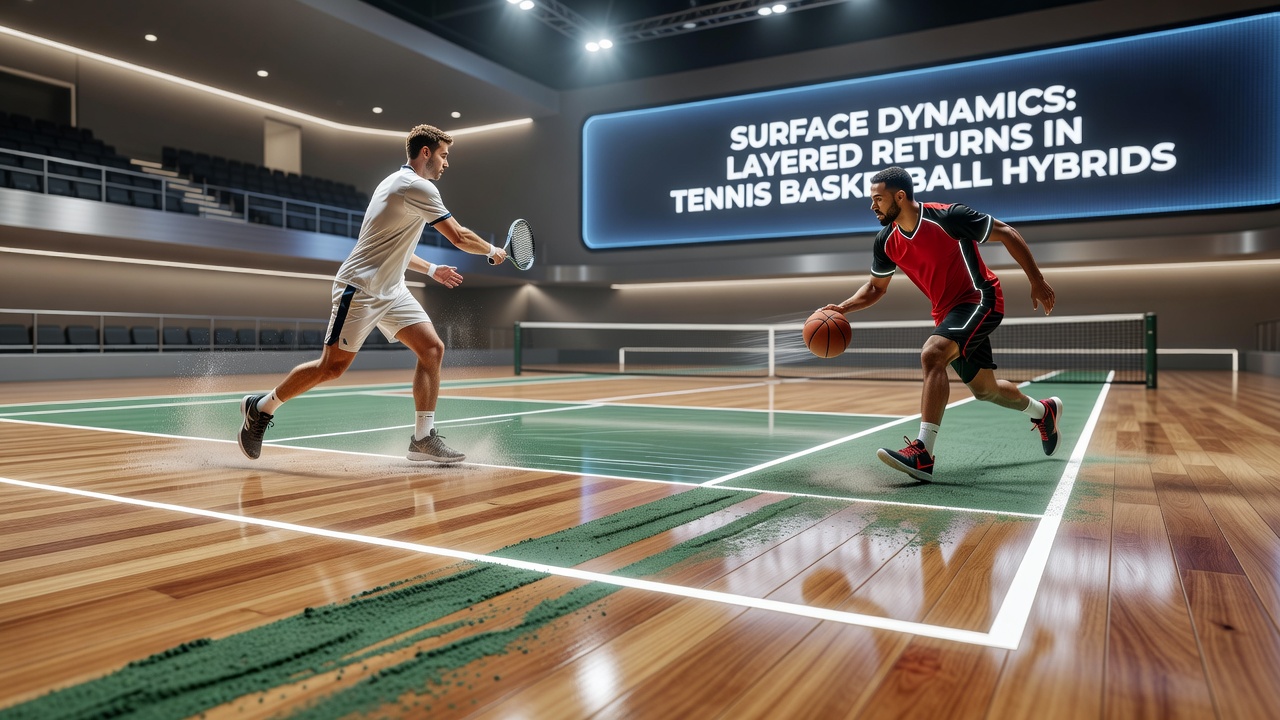
Playing surfaces create measurable effects on match statistics across tennis and basketball events, and these effects feed directly into accumulator structures that combine selections from both sports. Observers note that clay courts slow ball speed and increase rally lengths while grass courts accelerate serves and favor shorter points, patterns that alter win probabilities for specific player profiles in ways that operators incorporate into odds calculations.
Clay and Grass Effects on Tennis Selections Within Hybrids
Clay surfaces extend average point duration by 20 to 30 percent compared with grass, according to match data compiled by the International Tennis Federation, and this extension shifts implied probabilities toward baseline players who maintain higher consistency over longer exchanges. Bettors who layer tennis selections onto basketball legs therefore adjust stake allocation when a clay event appears in the slip because historical returns on such combinations show tighter variance once surface-adjusted models are applied. Grass events produce the opposite pattern, with serve-dominated outcomes compressing match times and elevating the value of first-serve percentage metrics in pricing algorithms.
Basketball Court Factors and Cross-Sport Layering
Basketball venues introduce their own surface variables through differences in hardwood composition, friction coefficients and court dimensions that affect player movement and shooting percentages. Research from sports performance laboratories indicates that faster, less grippy surfaces correlate with higher transition scoring rates, data that operators cross-reference with tennis surface statistics when constructing hybrid markets. Those who build multi-leg wagers pairing tennis matches with basketball games find that surface-driven adjustments in one sport propagate through the overall payout multiplier because each leg carries an independent but interconnected probability weight.
June 2026 Data Patterns in Hybrid Accumulators
Records compiled through June 2026 show a 7 percent increase in hybrid accumulator volume compared with the same period in 2025, with the largest share involving clay-court tennis legs paired with indoor basketball fixtures. The rise coincides with scheduling clusters that place European clay events alongside North American summer league basketball, creating natural opportunities for surface-based correlation models. Figures from European sports analytics providers reveal that correctly weighting clay-induced rally extensions against basketball transition rates improved realized returns on correctly constructed slips by an average of 4.2 percent over unadjusted baselines.
Modeling Techniques Used by Market Participants
Analysts apply multivariate regression that incorporates surface friction, ball bounce height and historical player adaptation rates to generate adjusted probabilities for each leg. These models feed into pricing engines that determine the combined odds offered on hybrid slips, and operators update coefficients weekly to reflect recent tournament results on specific surfaces. Data released by the Australian Sports Commission in early 2026 confirmed that surface-adjusted models reduced over-round margins on tennis-basketball combinations by 1.8 percentage points relative to generic multi-sport products.
Bankroll Allocation Across Surface-Linked Layers
Participants who track surface statistics often scale stakes according to the number of legs that carry identifiable surface advantages, placing larger portions on combinations where clay or grass effects align with strong historical edges. This approach produces layered return profiles because each correctly weighted leg compounds the payout while surface mismatches introduce measurable drag on overall performance. Records from Canadian provincial gaming authorities indicate that accounts employing surface-weighted sizing maintained steadier growth curves through the first half of 2026 compared with flat-stake approaches on the same hybrid markets.
Conclusion
Surface characteristics in both tennis and basketball supply quantifiable inputs that operators and participants incorporate into hybrid accumulator construction. The interaction between clay-induced rally extensions, grass-driven serve dominance and basketball court friction creates layered probability structures that influence final payout distributions. Ongoing data collection through 2026 continues to refine these relationships, allowing models to capture seasonal shifts in scheduling and venue conditions without requiring subjective adjustments.