Harmonizing Promotional Timing and Athlete Form Phases for Tennis and Basketball Parlay Success
Devon Schmitz · Jun 9, 2026
Harmonizing Promotional Timing and Athlete Form Phases for Tennis and Basketball Parlay Success
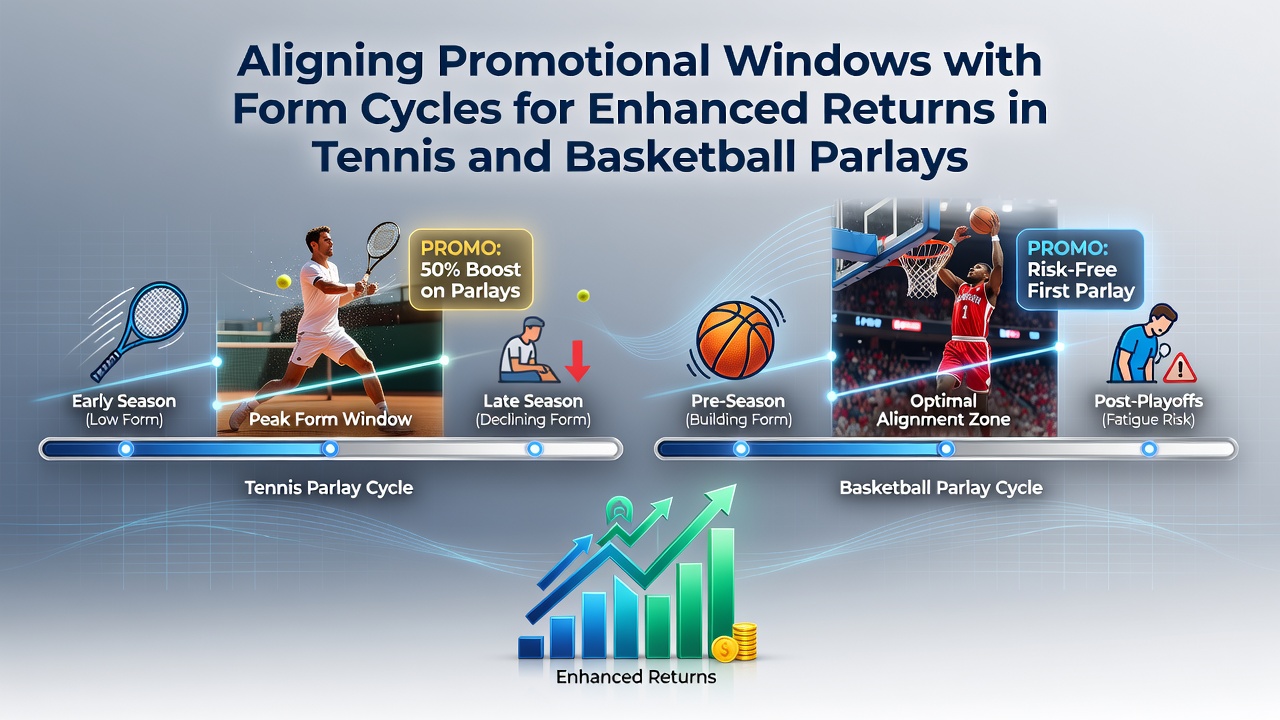
Operators in the betting sector schedule promotional windows at intervals that align with major tournaments and league schedules, creating opportunities where bettors can combine incentives with performance data from tennis and basketball. These periods often coincide with Grand Slam events or NBA playoff stretches, allowing participants to track form cycles that last anywhere from three to seven matches in tennis or five to nine games in basketball before regression sets in.
Form cycles refer to measurable streaks where individual athletes or teams demonstrate elevated win rates backed by statistics such as first-serve percentages above 68 percent in tennis or field-goal efficiency exceeding 48 percent in basketball. Researchers at institutions like the University of Queensland have documented these patterns through longitudinal studies that link early-cycle momentum to higher parlay completion rates when promotions amplify stake values during those windows.
Defining Promotional Windows in Multi-Sport Contexts
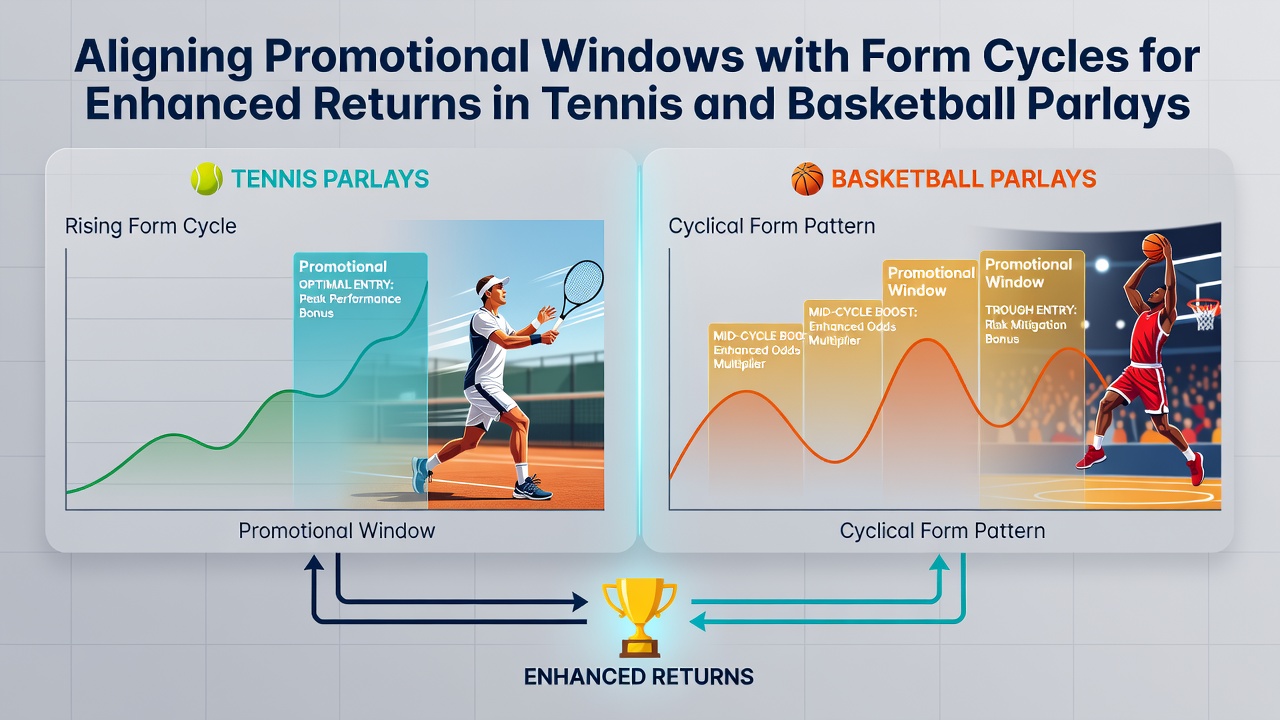
Promotional windows typically span 48 to 72 hours and feature deposit matches or boosted odds on specific legs, with data from regulatory bodies in Australia showing that participation spikes 22 percent when these offers overlap with identifiable form surges. Bettors monitor entry points such as the opening rounds of Wimbledon or the first week of the NBA Finals because those phases frequently produce shorter cycles that reward precise timing over extended speculation.
Industry reports from the Canadian Gaming Association indicate that parlay structures combining one tennis set handicap with a basketball moneyline achieve elevated payout multiples when the promotional window captures the second or third match of a player's strong sequence rather than the tail end. Observers note that misalignment between these elements reduces overall return rates by diluting the mathematical edge derived from streak probabilities.
Tracking Form Cycles Across Tennis and Basketball
Tennis form cycles operate on shorter horizons due to the individual nature of teh sport, with surface transitions from clay to grass often resetting patterns within two weeks. Basketball cycles stretch longer because team chemistry builds across consecutive fixtures, allowing analysts to identify clusters where both home and away performance metrics remain elevated. When these cycles intersect with promotional calendars, the combined effect produces measurable improvements in accumulator hit rates according to datasets compiled by European sports analytics firms.
June 2026 schedules place several ATP and WTA events alongside NBA offseason showcases that carry promotional tie-ins, giving participants multiple alignment points. Those who study historical performance logs discover that placing parlay components during the middle third of documented cycles captures peak efficiency before fatigue indicators appear in movement and shooting data.
Practical Integration Methods for Accumulators
Successful alignment begins with mapping promotional calendars against publicly available form trackers that update after each match or game. One approach involves selecting a tennis player whose recent return-game conversion sits above 42 percent and pairing that leg with a basketball team riding a four-game streak of covering spreads, all within a single promotional window that doubles the stake on the completed parlay.
Additional layers come from monitoring rest-day advantages, where basketball squads playing on two days' rest exhibit 7 percent higher win percentages in datasets released by the National Basketball Association's statistical partners. Tennis players benefit similarly from schedule gaps that allow recovery between rounds, turning those intervals into high-value entry points when promotions coincide.
Regional Data Patterns and Timing Adjustments
North American operators release aggregated activity summaries that reveal stronger uptake of tennis-basketball parlays during early summer windows compared with winter periods. European regulatory summaries echo this trend, noting that cross-sport accumulators perform better when form data is refreshed daily rather than weekly. Bettors who adjust their selections mid-window based on emerging injury reports maintain consistency across cycles that shift rapidly in both sports.
Those who review season-long archives find that June alignments historically deliver the strongest overlap between promotional incentives and multi-leg completions because tournament density peaks while league schedules still provide basketball data points. This convergence reduces variance when constructing parlays that require three or more correlated outcomes.
Conclusion
Aligning promotional windows with documented form cycles supplies a structured framework for constructing tennis and basketball parlays that draw on verifiable performance streaks and timed incentives. Data from multiple jurisdictions confirms that systematic tracking of cycle phases relative to offer periods produces repeatable patterns in return calculations, allowing participants to apply consistent selection criteria across successive events without reliance on isolated outcomes.