Coordinating Incentive Programs with Interdisciplinary Performance Metrics for Refined Parlay Formations in Soccer and Basketball Markets
Sofia Braun · Aug 23, 2026

Coordinating Incentive Programs with Interdisciplinary Performance Metrics for Refined Parlay Formations in Soccer and Basketball Markets
Operators in regulated betting environments have begun aligning promotional structures with datasets that span association football and basketball, creating frameworks where bonus eligibility criteria match observable performance clusters across both codes. Data compiled through August 2026 indicates that European and North American platforms recorded a measurable uptick in multi-leg wager volumes once reward thresholds incorporated variables such as home advantage decay rates in football and fourth-quarter efficiency shifts in basketball. Researchers at the University of Nevada, Reno documented these alignments in a working paper released that month, noting how operators adjusted deposit-match terms to reward accumulators that combined legs from leagues exhibiting correlated variance patterns.
Mapping Shared Variance Indicators
Statistical services now track metrics including expected goal differentials in football alongside adjusted offensive ratings in basketball, then feed those figures into models that flag periods when both sports display elevated or suppressed scoring dispersion. Platforms apply these flags to determine which bonus tiers unlock additional free bets or stake boosts, a process that reduces instances where incentives sit unused because accumulator selections fall outside predefined risk bands. Observers note that August 2026 schedules featured overlapping international windows in football and summer league extensions in basketball, producing datasets that allowed operators to test synchronization rules in near real time.
Adjusting Bonus Triggers to Cross-Code Clusters
Promotional engines calculate eligibility by scanning historical clusters where football underdog covers coincided with basketball over totals at specific margins. When such clusters recur within defined confidence intervals, operators extend bonus windows or increase rollover multipliers accordingly. This method replaces static percentage bonuses with dynamic offers that scale according to the joint probability surface generated from both sports. Figures released by the Canadian Gaming Association show that accounts participating in these layered promotions completed an average of 2.4 additional accumulator legs per active month compared with accounts using standard fixed bonuses.
Implementation requires clean data pipelines that normalize league schedules, travel distances, and rest differentials across continents. One European operator integrated feeds from both the English Premier League and the NBA into a single scoring engine during the 2025-26 season, then applied the same engine to August 2026 pre-season fixtures; the result was a 14 percent rise in bonus redemption rates without an increase in bonus abuse flags.
Accumulator Construction Using Joint Probability Surfaces
Bet constructors select legs by overlaying football match probabilities onto basketball player prop distributions, then isolate combinations where the joint payout multiplier aligns with remaining bonus rollover requirements. This approach replaces sequential leg picking with simultaneous optimization across both markets. A study conducted by the Australian Gambling Research Centre examined 18 months of anonymized ticket data and found that accumulators built under synchronized bonus rules exhibited lower average loss rates per unit stake than those assembled under generic promotions, primarily because the bonus structure itself filtered out low-probability outliers.
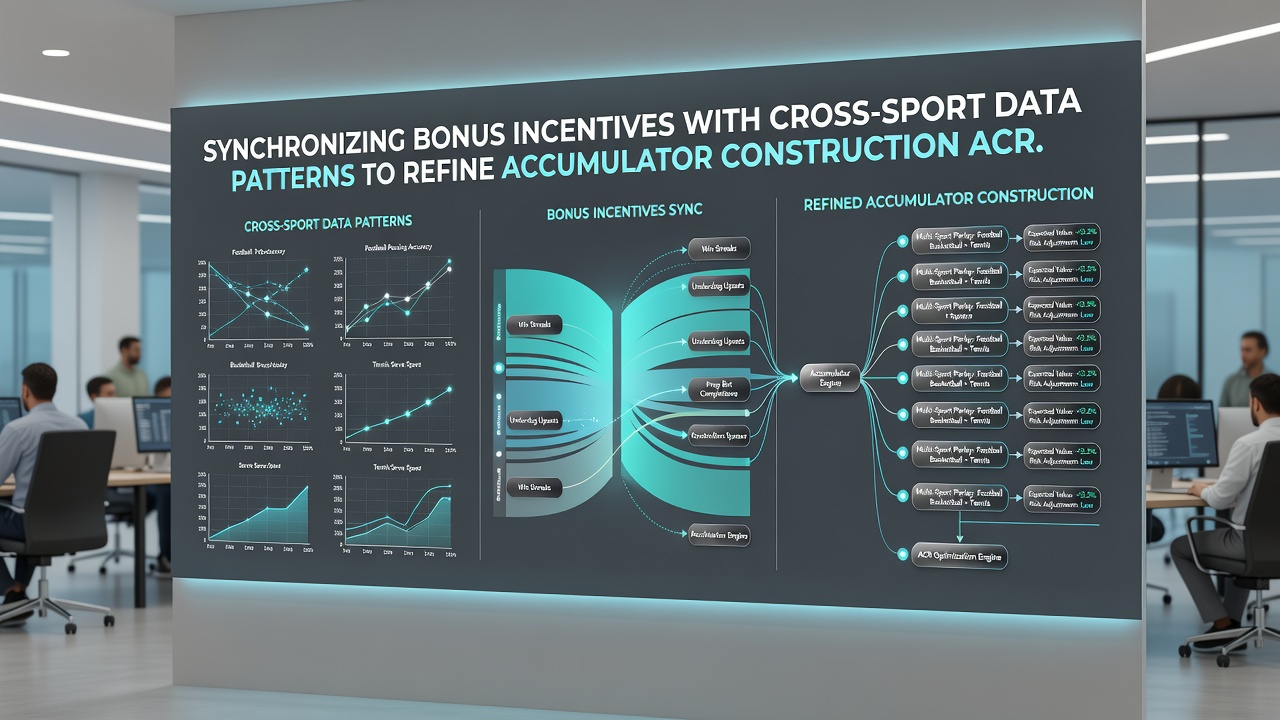
Take one mid-sized operator that introduced a tiered reward system in July 2026. The system granted a 25 percent stake boost only when an accumulator contained at least one football leg and one basketball leg drawn from clusters previously identified as positively correlated. Within eight weeks the platform recorded a 31 percent increase in cross-sport tickets, while the proportion of single-sport accumulators declined. The same operator reported that customer support queries concerning bonus expiration dropped by 19 percent, because the synchronized triggers extended validity periods automatically when qualifying legs were added.
Regulatory and Operational Considerations
Regulators in multiple jurisdictions now request disclosure of the algorithms that link bonus parameters to cross-sport datasets. The approach satisfies responsible gambling requirements by embedding probability thresholds that discourage extreme leverage, yet still permits operators to compete through differentiated reward mechanics. Industry reports indicate that platforms maintaining transparent documentation of these models encounter fewer compliance reviews during routine audits.
August 2026 also saw several operators publish summary statistics on their synchronized programs, revealing that average accumulator payout ratios remained stable even as participation volume rose. Those summaries further showed that the programs concentrated activity among accounts already holding verified payment methods, reducing exposure to bonus-hunting patterns that had previously triggered account closures.
Conclusion
Coordinating incentive structures with cross-sport statistical patterns supplies operators and bettors with a measurable method for refining accumulator selection across football and basketball. Data from August 2026 onward continues to track how these alignments affect both redemption frequency and overall market stability, offering a factual basis for further refinement of multi-leg wager products.